Open two tabs on Fort Payne home prices and you will get two different towns. One says the median sale price sits around $242,000. The other says the same city's average price jumped more than 80 percent in a single year. Neither number is wrong. Both are describing a place where a modest brick ranch two blocks from downtown and a six-acre retreat on the brow of Lookout Mountain get folded into the same statistic, even though almost nothing else about them is the same.
That is the actual story here, and it matters if you are cross-shopping Fort Payne against Rainsville, Mentone, or anywhere else in DeKalb County. A single median or average from this town tells you almost nothing about what you would pay for a specific kind of house in a specific part of it. You have to know which Fort Payne you are looking at before the number means anything.
The Numbers That Don't Agree
Here is what shows up if you pull data from a few different windows over the past year or so.
| Snapshot | Window | Median Price | Average Price | Homes Sold | Year-Over-Year Trend |
|---|---|---|---|---|---|
| Fort Payne, city | June 2025 | $260,000 | $357,000 | 6 | Median down 27.8%, average up 81.5% |
| Fort Payne, city | July 2026 | $242,000 | $275,244 | not reported | Mixed by source |
| DeKalb County, whole | March 2026 | $227,000 | not reported | 43 | Down 3.7% |
Look at that top line first. Pulled from the same live market page, one metric for Fort Payne said prices fell by more than a quarter and the other said they rose by more than four fifths. That is not a typo and it is not two competing companies disagreeing about the market. It is what happens when a median (the middle value in a small stack of sales) and an average (a number that any single very expensive or very cheap sale can drag around) get calculated from a pool of only six closings in a month.
Compare that to the county-wide row. DeKalb County as a whole, with 43 sales in March 2026, moved a modest 3.7 percent. A bigger sample smooths itself out. Fort Payne's own number, with a tenth of that sales volume, does not have enough transactions in a given month to smooth anything. One large sale on the mountain or one small sale downtown can swing the whole line.
Fort Payne Is Actually Two Housing Markets Wearing One Zip Code
The reason a handful of closings can swing Fort Payne so hard is that the city's housing stock is not one continuous market. It is two markets that happen to share a mailing address.
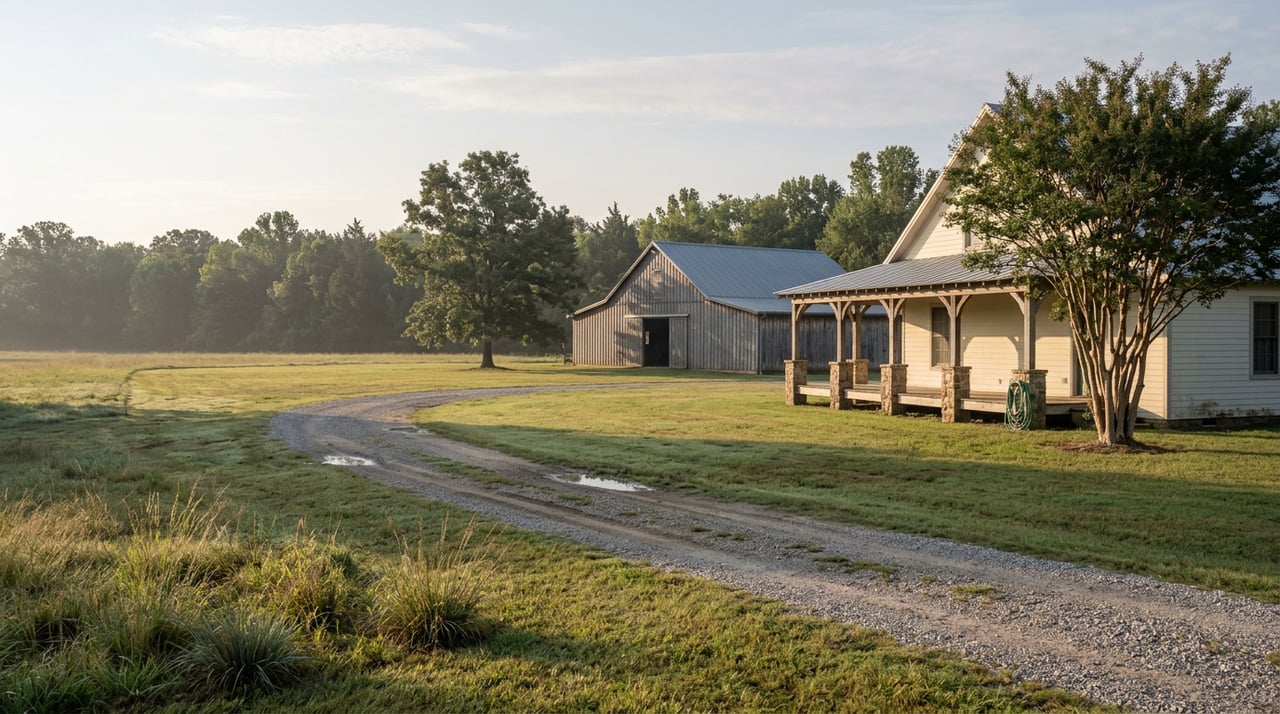
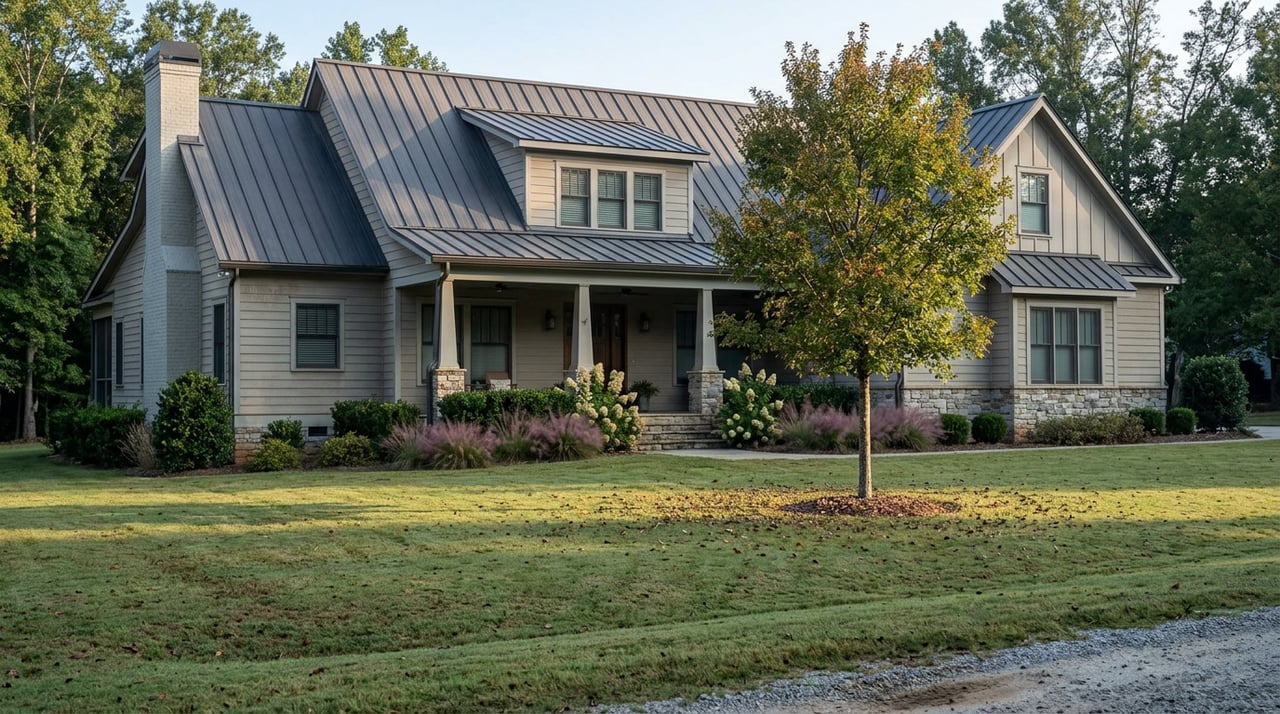
Down in the valley and around downtown, the housing stock is what you would expect from a mid-century mill town: brick ranches, some historic homes near the courthouse square, subdivisions like Lakewood and Terrapin Hills with modest three- and four-bedroom floor plans on quarter- to half-acre lots. These are the homes that make up most of the sales volume, and most of them land comfortably under $300,000.
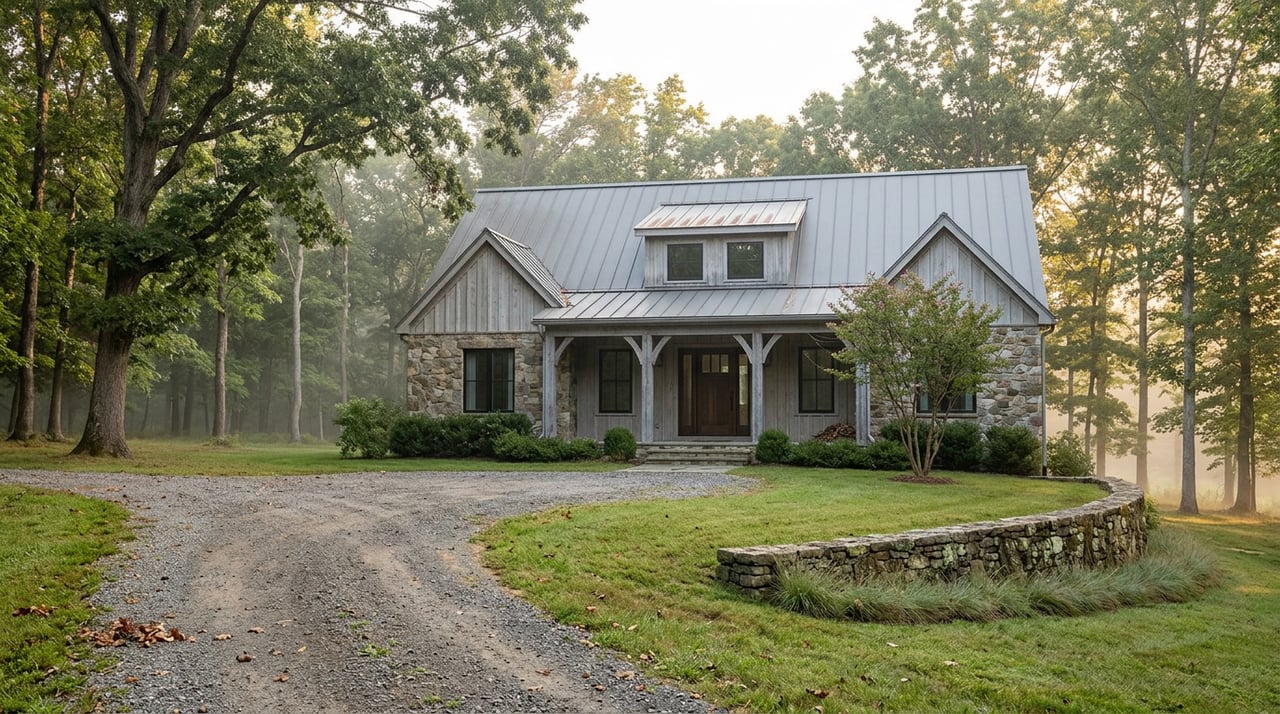
Then there is Lookout Mountain. Subdivisions like DeSoto Bluffs, Hollywood Heights, Chinquapin, Foxfield Estates, and Pine Hills sit on the brow above town, and the properties up there are built around a completely different value driver: elevation and view. A wooded 2.3-to-4.3-acre brow lot in DeSoto Bluffs, with no house on it at all, lists for around $90,000 to $100,000 just for the dirt and the sightline. Add a home, especially one with acreage, a pond, or bluff frontage, and the price climbs fast. One current listing puts a home on more than 17 acres with sweeping bluff views and a private pond well into luxury territory. Another lists a fenced 20-acre mountain property with a 3,000-square-foot home built for horses and privacy.
Both of these are "Fort Payne homes." Neither behaves like the other in a spreadsheet.
Six Closings Is All It Takes to Move the Number
This is the part that trips up buyers who are used to shopping in bigger markets. In a city where hundreds of homes close every month, one outlier sale barely nudges the median. In Fort Payne, where the June 2025 snapshot showed only six total sales, a single closing on the mountain can represent close to 17 percent of that month's entire transaction volume. Homes also sat on the market an average of 95 days that month, down sharply from 187 days the year before, which tells you the pool of comparable sales was thin and shifting even on the timing side, not just the price side.
None of this means the Fort Payne market is unstable or risky. It means the reported number is not a trend line. It is a snapshot of whichever handful of houses happened to close that particular month, and whether those houses happened to sit in the valley or up on the brow.
What the Range Actually Buys
As of July 2026, active listings in Fort Payne span roughly $54,900 to $2,150,000. That is not a typo either, and it is the clearest evidence that averaging this market into one figure hides more than it reveals.
At the low end, you are typically looking at fixer-upper homes needing work to meet current code, or small in-town lots close to Gault Avenue. In the middle, you are in classic Fort Payne valley territory: three-bedroom brick homes, some with detached workshops or carports, priced in the low-to-mid $200,000s, often within walking distance of downtown shops and the schools that serve most of the city. Toward the top, you are almost always talking about Lookout Mountain: acreage, brow or bluff frontage, proximity to Little River Canyon National Preserve or DeSoto State Park, and often a school reference to the Plainview district rather than city schools.
The gap between those tiers is not a market inefficiency waiting to close. It reflects two genuinely different products. A buyer who wants walkability and a modest monthly payment is shopping a different Fort Payne than a buyer who wants privacy, a view, and a wooded lot in the Blake Community or out toward Sand Mountain.
What to Ask Before You Compare Fort Payne to Anywhere Else
If you are pricing Fort Payne against another North Alabama town, the median alone will mislead you. Before you compare, find out:
- Is the listing in the valley/downtown grid or up on Lookout Mountain, and which subdivision (Lakewood and Terrapin Hills read very differently than DeSoto Bluffs or Hollywood Heights)
- How much of the acreage is usable, level land versus wooded slope, since brow lots are priced on view and privacy more than square footage
- Whether the school reference is Fort Payne City Schools or the Plainview district, since that distinction often maps directly to valley versus mountain
- How many comparable sales actually closed in the last 90 days in that specific pocket, not the whole city, since a citywide median built on five or six sales is not a reliable comparison point
A house priced at $250,000 in Terrapin Hills and a house priced at $250,000 on a brow lot near Citadel Rock Road are not the same purchase, even if the number on the listing sheet matches. One is buying you square footage and proximity to town. The other is buying you elevation, acreage, and a view that a builder cannot manufacture on flat ground.
Cary and Chrystal Lowery spend most of their working days moving between exactly these two kinds of property, from in-town brick homes to acreage and rural land across North Alabama, which is why they read a listing like this differently than a national portal does. If you are trying to figure out which Fort Payne actually fits what you are looking for, or how a specific address there compares to Boaz, Crossville, or Guntersville, Lowery Real Estate Group can walk the numbers with you against the actual property, not just the citywide average.