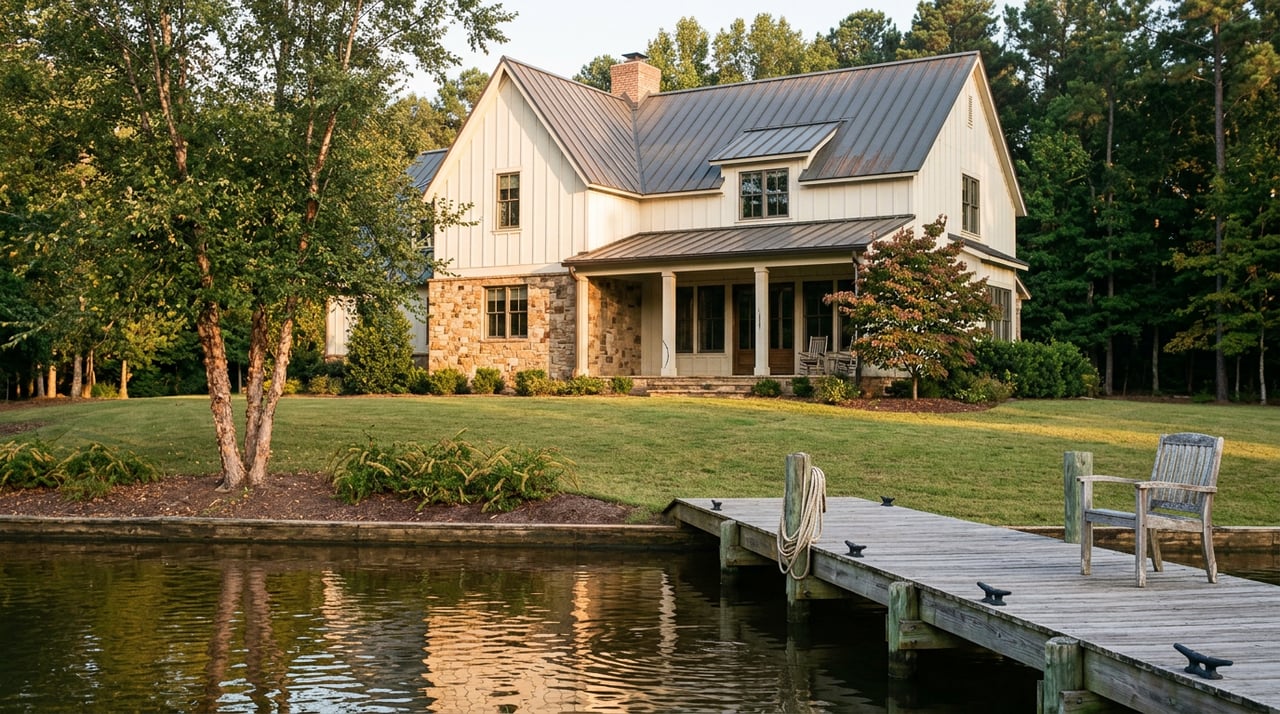
Picture the last hour of a closing on a Lake Guntersville waterfront home. The wire has cleared, the keys are sitting on the kitchen counter, and the new owners are already talking about coffee on the boathouse deck next weekend. Nobody in the room mentions that the dock outside, the one built into the sale price, the listing photos, and the whole reason this family picked this lot over two others, still legally belongs to a permit that has nothing to do with the deed they just signed.
That permit is issued by the Tennessee Valley Authority under Section 26a of the TVA Act, and it does not transfer with the property the way a survey or a title does. It stays attached to the person who applied for it. When that person sells, the dock, boathouse, seawall, or pier they built stays put physically, but its legal right to exist passes to nobody automatically. The new owner has to ask for it, in writing, within 60 days of closing.
For a lake where waterfront homes routinely carry premium price tags built on the assumption of dock access, that is not a small detail. It is the difference between owning a functioning amenity and owning a structure you technically have to apply for the right to keep.
The Permit Belongs to a Person, Not a Deed
TVA's own guidance for buyers and sellers is direct about this: permits do not automatically transfer with property ownership, and the new owner is required to apply for a Section 26a permit in their own name within 60 days of closing. TVA's shoreline construction FAQ says the agency will only discuss an application with the applicant or someone that applicant has formally named as an authorized agent, which can be a spouse, a real estate agent, or a dock builder, but has to be designated on paper.
This is why a smart offer on lake property treats the permit the same way it treats a septic system or a well. It gets verified before closing, not discovered after. Ask the seller for a copy of the 26a permit, confirm every structure on the property, dock, boathouse, seawall, ramp, is actually listed on it, and walk the shoreline with that permit in hand to check that what was built matches what was approved.
Everything on the Water Needs Paper
A surprising number of buyers assume permits are only for big builds. TVA's own shoreline permits FAQ lists what actually falls under Section 26a, and the list is longer than most people expect:
- Residential docks, piers, and boathouses
- Land-based steps and walkways leading to the water
- Shoreline stabilization of any kind, including riprap
- Vegetation removal within the shoreline management zone
- Boat launching ramps and associated driveways
Even a homeowner clearing brush along their own shoreline for a better view can trigger the permit requirement. This is not a program built around marinas and commercial docks. It reaches into the small, ordinary things a lake owner does every season.
New Build vs. Ownership Transfer: The Fee Difference Nobody Explains
TVA prices new construction and ownership transfers differently, and the gap tells you something about how the agency wants this handled.
| Situation | Typical Fee | What Triggers It |
|---|---|---|
| New dock, pier, or boathouse construction | About $500 | Building something that did not exist before |
| Reissuing a permit to a new property owner | About $250 | A sale where the structure already exists and is already permitted |
If a listing photo shows a dock, ask for the permit before you ask for anything else. Everything downstream of that document, from financing to insurance to how you actually use the water, depends on it being real and current.
What a Home Can Lose in the Sale
Two categories of structures deserve extra scrutiny, because they can look completely normal from the water and still be out of compliance.
The first is any second-story dock deck that has been enclosed. Federal regulation allows an open deck with railing on top of a boat slip, but it cannot be roofed, sided, or screened in. If a covered structure exists, it will likely have to be removed before or after the sale, and that is a cost worth negotiating rather than discovering.
The second is floating cabins. New floating cabins have been prohibited on TVA reservoirs since December 16, 2016. Older floating cabins can remain in use only if they existed before that date and continue to meet the health, safety, and environmental standards TVA has set for them, along with holding a current permit and paying required fees. A floating cabin that looks established and lived-in is not automatically grandfathered. Its status depends entirely on when it was built and whether its paperwork has kept pace since.
The eCFR also caps how far structures can extend into the water. Docks and walkways cannot reach more than 150 feet from shore, or more than a third of the way to the opposite bank, whichever is shorter. On Lake Guntersville specifically, fixed piers and docks must have deck elevations at least 18 inches above full summer pool level, a detail that matters if you are evaluating an older dock built to different standards.
Two Different Offices, One Dock
TVA regulates what happens in and over the water. It does not regulate what happens on land above the shoreline. Building permits, floodplain compliance, and inspections for the house itself and any structures upland of the shoreline management zone run through local government instead, and which local government depends on where the parcel sits. Property inside Guntersville's city limits typically goes through the city. Property outside city limits typically goes through Marshall County.
That split means a single waterfront purchase can involve two entirely separate approval chains: one federal, for the dock and shoreline, and one local, for the house and anything built on land. A buyer who only checks one has only checked half the property.
Before You Write the Offer
If a home you're considering on Lake Guntersville has a dock, boathouse, or any shoreline structure, a few steps before you sign protect you from finding out about a problem after you already own it.
- Request a copy of the current Section 26a permit from the seller or listing agent, and confirm it lists every structure on the property.
- Walk the shoreline yourself and compare what's built to what the permit describes.
- Ask directly whether any second-story dock space is enclosed, and if so, whether it has ever been flagged.
- If there's a floating cabin, ask when it was built and request documentation showing it predates December 16, 2016.
- Confirm whether the parcel sits inside Guntersville city limits or in unincorporated Marshall County, so you know which office handles the land-side permits.
- Build a permit contingency into your offer, giving you room to negotiate or exit if the shoreline authorization doesn't check out.
Delays in TVA's review process most often come from incomplete applications, changes made after submission, or unresolved violations from a previous owner, so starting clean matters more than starting fast.
Common Questions
Does an unpermitted dock kill a sale? Not necessarily, but it changes the transaction.
What if the seller can't find their original permit? TVA's Public Land Information Center can be reached at (800) 882-5263 to request a copy of a permit on file for a specific parcel. This should happen well before closing, not the week of.
Do all waterfront homes on Lake Guntersville need a 26a permit? Not every waterfront property is eligible to even apply. TVA land is zoned for different purposes, and only parcels with the right land rights qualify for a dock permit in the first place. That eligibility should be confirmed as part of due diligence, especially on undeveloped waterfront lots.
If you're weighing a purchase on Lake Guntersville, or you're a current owner wondering whether your own shoreline paperwork is actually current, Lowery Real Estate Group can walk the details with you before they become a closing-day surprise. Cary and Chrystal have spent years helping North Alabama buyers and sellers work through exactly this kind of fine print, and they would rather you ask the awkward question now than learn the answer after you already have the keys.
This article is general information, not legal, tax or financial advice. Consult a qualified professional about your situation.